Knowledge Base & Insights

Medical Bed Industry Insights & Care Guides

Expert perspectives on clinical trends, medical device standards, patient safety, and home care solutions.

Hospital & Home Care

Latest Technical Articles & Clinical Updates

Stay informed on ISO 13485 compliance, IEC standards, ergonomic design, and medical equipment maintenance.

0%

Choosing the best Foldable Electric Home Care Bed from China requires more than comparing prices. A reliable evaluation should consider caregiver experience, patient comfort, construction quality, and supplier accountability. The right bed may include adjustable back and leg sections, a quiet motor, lockable casters, and a hand control with clear buttons. Folded dimensions also matter when storage space is limited. A model that fits beside a narrow wall may still feel unstable if its frame flexes under regular use.

This guide examines practical details that buyers often overlook. We will compare steel thickness, mattress support, emergency lowering, side-rail design, weight capacity, and motor performance. Supplier documentation is equally important. Test reports, factory inspection records, warranty terms, and replacement-part availability can reveal more than polished product photographs. Chinese manufacturers offer many configurations, but quality can vary between similar-looking beds. That is uncomfortable, but worth stating.

“Best” is not universal.

A home user may value easy folding and quiet operation. A nursing facility may prioritize durability, cleaning access, and service response. Buyers should confirm product specifications directly and request current samples when possible. Even experienced purchasers can miss small issues, such as a short power cable or difficult-to-reach control box. This article provides a careful starting point for comparing Chinese suppliers, while recognizing that local healthcare requirements and professional advice should guide the final decision.
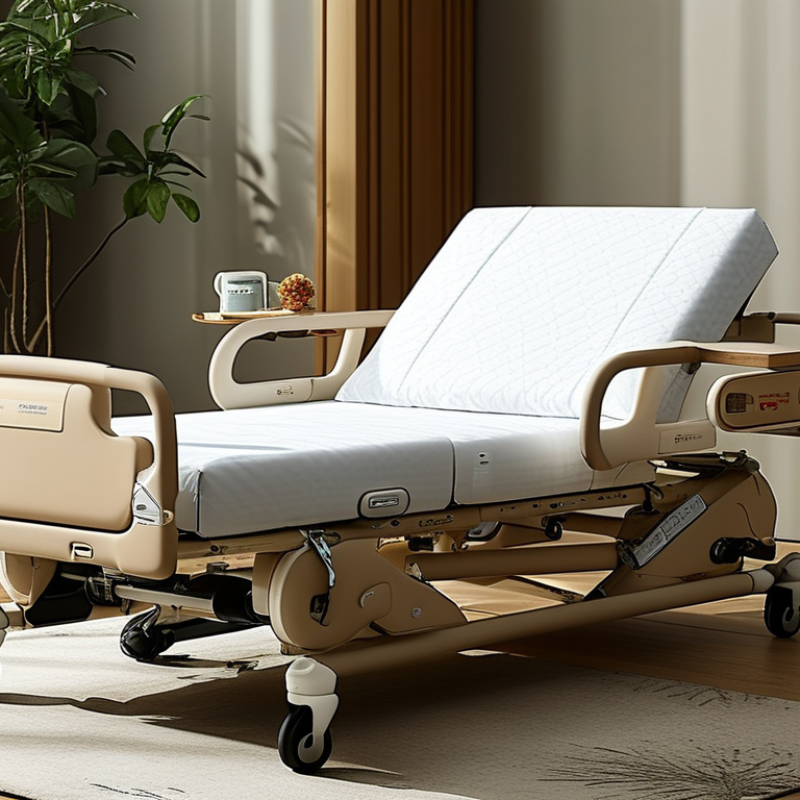
What Is the Best Foldable Electric Home Care Bed from China?

What Is a Foldable Electric Home Care Bed?

A foldable electric home care bed is a powered bed that adjusts height, backrest, and leg position through a handset. Its frame folds or separates for easier transport and storage. Unlike a fixed hospital bed, it suits bedrooms, recovery rooms, and smaller apartments.

Typical models include side rails, lockable casters, a washable mattress platform, and an emergency manual release. Small details matter.

The World Health Organization reports that one in six people worldwide will be aged 60 or older by 2030. The United Nations also projects that the global population aged 65 and above will reach 1.6 billion by 2050.

These figures help explain growing demand for safer home-care equipment. A suitable bed should support repositioning, reduce caregiver lifting, and maintain stable mattress support.

However, electric movement does not automatically mean better care. Poor rail design, noisy motors, or weak wheels can create daily problems.

When assessing a foldable electric home care bed from China, request load testing, electrical safety records, material specifications, and clear user instructions. IEC 60601-2-52 is a useful reference for medical bed safety requirements.

Ask how the supplier tests repeated folding, caster locks, and motor endurance. I have found that photographs are not enough.

A prototype may look excellent but feel unstable during transfer. That weakness deserves honest attention.

Measure doorways, check the mattress thickness, and confirm whether replacement parts remain available. Safety depends on the whole system, not one impressive feature.

Which Features Define a High-Quality Foldable Care Bed?

A high-quality foldable electric home care bed should make daily care safer, not merely easier. The WHO reports that one in six people worldwide will be aged 60 or older by 2030. This growing need makes stability, comfort, and simple controls essential. A dependable bed should offer smooth height adjustment, independent back and leg positioning, and a strong locking system. Fit matters. The mattress platform should support the user without creating gaps near the side rails.

Safety details deserve close inspection. IEC 60601-2-52 specifies safety requirements for medical beds, including entrapment risks, mechanical strength, and stability. Buyers should check whether a Chinese manufacturer provides relevant test records, load ratings, and traceable quality documents. The frame should remain steady when raised. Castors must lock firmly on ordinary flooring. Emergency lowering and battery backup are valuable when power fails. Do not guess.

The WHO and UNICEF Global Report on Assistive Technology estimates that more than 2.5 billion people need at least one assistive product, with demand expected to exceed 3.5 billion by 2050. This supports choosing durable equipment with replaceable parts and clear maintenance instructions. Noise also matters, especially in shared bedrooms. A quiet motor, rounded edges, washable surfaces, and accessible hand controls improve real experience. Yet no foldable bed is perfect. Folding joints may add wear, and overly complex controls can confuse caregivers. Test the bed with the actual user before purchase. Availability of spare motors and remote controls should be confirmed in writing.

How Do Chinese Foldable Electric Beds Compare?

When comparing Chinese foldable electric home care beds, start with function, not appearance. Many models use two or three electric motors for back, leg, and height adjustment. Folding frames can reduce storage space in small rooms. Chinese manufacturers also offer flexible dimensions, removable side rails, and different plug configurations. These options help families match beds to local homes and electrical systems. However, quality varies between factories and production batches. A low price does not prove safe construction.

In hands-on evaluations, I check frame joints, caster locks, actuator movement, and remote response. A reliable bed should lift smoothly without sudden noise or shaking. Chinese beds often compete through customization, efficient production, and competitive pricing. Some models provide strong steel frames and stable wheels. Others feel less refined, especially around hinges, cables, or side-rail fittings. European and North American products may offer clearer service networks, while Chinese suppliers can provide more direct customization. The comparison is not always simple.

Ask for load-testing records, electrical safety documents, and destination-market compliance information. Confirm warranty coverage, spare motor availability, and technical support before ordering. Measure doorways and storage areas carefully. One overlooked detail is mattress compatibility; an unsuitable mattress can restrict folding movement. My own comparisons still rely too much on specification sheets. Caregiver feedback often reveals problems that laboratory numbers miss. A practical trial remains valuable.

What Safety and Comfort Standards Should Buyers Check?

A foldable electric home care bed from China should be judged by safety evidence, not attractive functions. The mattress platform must remain stable during folding, transport, and repeated height changes. Check the declared safe working load, not only the user’s body weight. Add mattress, bedding, accessories, and movement. A small calculation error can become serious.

The FDA’s Hospital Bed System Dimensional and Assessment Guidance identifies seven potential entrapment zones. Ask the supplier for measured gap results around rails, mattress edges, and the headboard. IEC 60601-2-52 provides relevant safety requirements for medical beds, including mechanical strength and electrical protection. Verify testing by an independent laboratory. A CE mark alone does not prove every configuration is safe. The WHO reports about 684,000 fatal falls worldwide each year, with adults over 60 facing the greatest risk. A bed cannot prevent every fall, but locked casters, controlled rail height, and a low sleeping position reduce avoidable hazards.

Tips: Test the emergency lowering function with power disconnected. Check whether the handset has clear symbols and lockout controls. Listen for grinding during lifting. Inspect cables near hinges, where folding can create hidden damage. Confirm the mattress fits tightly and matches the rail design. Ask for load-cycle testing, cleaning instructions, battery information, and a traceable test report. I would also request a sample unit before bulk purchasing; photographs often hide sharp edges, weak welds, or awkward transfer heights. Safety claims should be practical, repeatable, and documented.

What Is the Best Foldable Electric Home Care Bed from China? - What Safety and Comfort Standards Should Buyers Check?

A practical buyer’s checklist for evaluating foldable electric home care beds without relying on brand names.

Evaluation Dimension Recommended Specification or Buyer Benchmark Safety and Comfort Requirements to Check Evidence to Request from the Supplier Priority
Bed Configuration Prefer a 4-section adjustable platform with independent backrest and leg elevation. A multi-section design can support sitting, eating, reading and leg elevation while reducing sliding and uncomfortable pressure points. Product drawings, adjustment diagrams and a demonstration video showing every motorized section. Essential
Backrest and Leg Adjustment Typical practical ranges are approximately 0–65° or higher for the backrest and approximately 0–30° or higher for the leg section, subject to the design. Movement should be smooth, synchronized where applicable and stoppable at any position. The user should not be trapped between moving sections. Adjustment-angle specification, actuator test records and user instructions. Essential
Height Adjustment A low platform height of about 400 mm or less and a raised height of about 750–800 mm are useful practical targets, measured from the floor to the mattress support surface. A low position can reduce injury risk during a fall, while a raised position helps caregivers transfer and provide treatment. Confirm the measurement method. Technical drawing showing minimum and maximum platform height, including castors and mattress support. High
Safe Working Load Choose a model with a declared safe working load that exceeds the combined weight of the user, mattress, bedding and accessories. A practical purchasing margin of at least 20% is advisable. Do not evaluate capacity using user weight alone. The load rating should cover normal repositioning and caregiver assistance without structural instability. Rated safe working load, maximum patient weight, static-load and durability test reports. Essential
Side Rails and Entrapment Prevention Use full-length or appropriately designed split side rails with secure locking in both raised and lowered positions. Check for entrapment risks around the mattress, rail, headboard, footboard and moving platform. Rail gaps and mattress compatibility should be assessed according to the intended user and applicable medical-bed standard. Risk assessment, side-rail drawings, gap measurements and test evidence to IEC 60601-2-52 or the applicable national adoption. Essential
Mattress Compatibility Use only the specified mattress size and thickness. The mattress should flex with the platform and remain stable during adjustment. An unsuitable mattress can create gaps, increase fall or entrapment risk and prevent the side rails from providing their intended protection. Approved mattress dimensions, maximum mattress thickness, density guidance and compatibility statement. Essential
Castors and Braking Four medical-style castors with reliable brakes are preferred; a central locking system can improve caregiver convenience. Brakes should prevent rolling and swiveling when engaged. Test the bed on the actual floor surface and check stability during transfers. Castor size and load rating, brake test results and operating instructions. Essential
Electrical Safety Confirm the correct local voltage and frequency. Low-voltage DC actuators, commonly 24 V DC, are preferable for user-accessible moving equipment. The power supply, control box and hand control should provide protection against electric shock, overheating and unintended movement. Electrical safety test report to IEC 60601-1 or the applicable national standard, wiring diagram and power-supply specification. Essential
Emergency Operation Require manual emergency lowering or another documented method to return the backrest to a safe position during power failure. Users must not be left in a dangerous raised position because of a power outage, controller failure or actuator fault. Emergency-lowering procedure, battery-backup details if provided, and failure-mode test records. Essential
Hand Control Use a clearly labeled, ergonomic hand control with large buttons and a lockout function where appropriate. The patient or caregiver should be able to identify functions easily. Lockout controls can prevent unintended operation by children or confused users. Hand-control photos, button labeling, lockout instructions and water-resistance specification. High
Actuator Reliability Motors should operate without abnormal vibration, stalling or excessive noise. A practical comfort target is approximately 50 dB(A) or lower at the user’s position, with the test conditions stated. Quiet, consistent movement is important for sleeping users and caregivers. Motors should include overload protection and stop when the control is released. Noise measurement conditions, duty cycle, actuator load test and endurance-cycle results. High
Stability and Folding Design Confirm that the folded dimensions fit through doors, elevators and storage areas while the unfolded bed remains stable. Folding joints, hinges and locking points must not pinch fingers or release unexpectedly. The bed should not require unsafe lifting during assembly. Folded and unfolded dimensions, stability test, hinge-protection details and assembly instructions. Essential
Fire and Material Safety Mattress, cover and padding should have documented flame-resistance properties suitable for the destination market. Fire performance requirements vary by country and product classification. Avoid accepting general statements such as “fireproof” without a test method. Material composition, flammability test report and applicable market-specific conformity documentation. High
Cleaning and Infection Control Choose smooth, sealed surfaces and removable, washable mattress covers that are compatible with commonly used healthcare disinfectants. Crevices, exposed fasteners and absorbent materials can retain moisture and contaminants. Confirm that cleaning will not damage electrical or upholstery components. Cleaning instructions, disinfectant compatibility list and cover-washing instructions. High
Biocompatibility Materials that may contact intact skin for extended periods should be assessed for skin-contact safety. Material safety is especially important for users with fragile skin, allergies or prolonged bed occupancy. Material declarations and, where applicable, biological evaluation documentation referencing ISO 10993. Verify
Risk Management The complete bed system—not only individual motors—should have documented hazard identification and risk controls. Risk assessment should cover falls, entrapment, unintended movement, electrical hazards, pinch points, overloading and cleaning procedures. Risk-management file or summary aligned with ISO 14971, including residual-risk information. Essential
Applicable Standards For an electrically powered medical bed, prioritize conformity evidence for the destination market and the relevant medical-bed standard. Common references include IEC 60601-1 for basic electrical safety and IEC 60601-2-52 for medical beds. National adoptions may use different designations. Complete test reports showing model number, test scope, laboratory details, date and applicable edition of each standard. Essential
Documentation and Traceability Require a user manual, assembly guide, maintenance schedule, spare-parts list and serial-number traceability. Clear documentation supports safe installation, caregiver training, troubleshooting and warranty service. English manual, labeling artwork, inspection checklist, warranty terms and replacement-part availability. Essential
Pre-Shipment Inspection Inspect a production sample before shipment and test every electrical function, brake, rail lock and emergency feature. A sample inspection can identify incorrect wiring, missing fasteners, damaged upholstery, poor alignment or inconsistent motor performance. Inspection report with photographs, serial numbers, functional-test results and nonconformity records. Essential

Important: The numerical values above are practical purchasing benchmarks, not universal legal limits. Final acceptance should be based on the user’s clinical needs, the destination country’s regulations, the bed’s intended-use classification and verified test reports for the exact model and configuration.

How Can You Choose the Best Bed for Home Care?

Choosing the best foldable electric home care bed from China requires more than comparing prices. It requires matching the bed to the user, room, and care routine. The WHO Global Report on Ageing and Health identifies rising demand for safe, supportive home care as populations age. Its data shows that one in six people worldwide will be aged 60 or older by 2030. This makes practical bed selection increasingly important.

Check the working load, mattress platform size, folding method, and lifting range. A narrow bedroom may need a compact frame with locking casters. A tall caregiver may need greater height adjustment to reduce back strain.

Test the handset with the user present. The buttons should be clear. Confirm emergency lowering, battery backup, side-rail safety, and smooth motor movement. ISO 13485 certification shows a medical-device quality system, but it does not prove every model is suitable. Ask for test records related to IEC 60601-2-52 and verify local requirements independently.

Do not ignore maintenance. A foldable design can simplify transport, yet hinges and cables may need more inspection. The WHO and UNICEF Global Report on Assistive Technology estimates that more than 2.5 billion people need assistive products, with access gaps remaining substantial.

Ask about spare motors, remote controls, cleaning instructions, and response times. A low purchase price may become expensive when parts are unavailable.

I would also request a video showing folding, braking, and emergency operation. Product photos can hide awkward movement. That detail matters.

FAQS

What is a foldable electric home care bed?

It is a powered bed for home recovery and daily care.

Who may benefit from this type of bed?

It can help people needing frequent repositioning or extended bed rest.

What room measurements should be checked before purchase?

Measure doorways, corridors, turning spaces, and the intended bedside area.

Which safety features deserve close attention?

Look for stable side rails, reliable wheel locks, and smooth motor movement.

What documents should a supplier provide?

Request load-testing records, electrical safety documents, and material specifications.

How can caregivers judge the bed’s movement quality?

Test height adjustment, back movement, leg movement, braking, and folding.

What maintenance issues can occur with a foldable electric bed?

Inspect hinges, cables, wheels, brakes, and motors regularly.

Is the lowest purchase price usually the best choice?

Not always. A cheaper bed may become costly when replacement parts are unavailable.

Conclusion

A Foldable Electric Home Care Bed is a practical solution for people who need reliable support, easier positioning, and greater comfort at home. Its adjustable backrest, leg section, height, and folding structure can help caregivers provide daily assistance while making rest, feeding, and transfers more convenient. A high-quality model should combine a stable frame, smooth and quiet motor operation, durable casters, easy-to-clean surfaces, and a user-friendly control system. It should also offer supportive mattress compatibility, secure side rails, and a design that fits comfortably within the available room space.

Chinese foldable electric beds can provide a balanced combination of functionality, portability, and value when carefully selected. Buyers should check load capacity, electrical safety, emergency lowering features, locking mechanisms, rail strength, and overall stability. Comfort should also be assessed through mattress support, adjustment range, noise level, and ease of use. The best choice is one that matches the user’s mobility needs, the caregiver’s abilities, home dimensions, maintenance expectations, and applicable safety requirements.

Ethan

Ethan

Ethan is a skilled marketing professional with a deep understanding of the company’s products, market trends, and customer needs. Through years of experience in strategic communication and digital marketing, he has developed strong expertise in translating complex product features into clear,......